

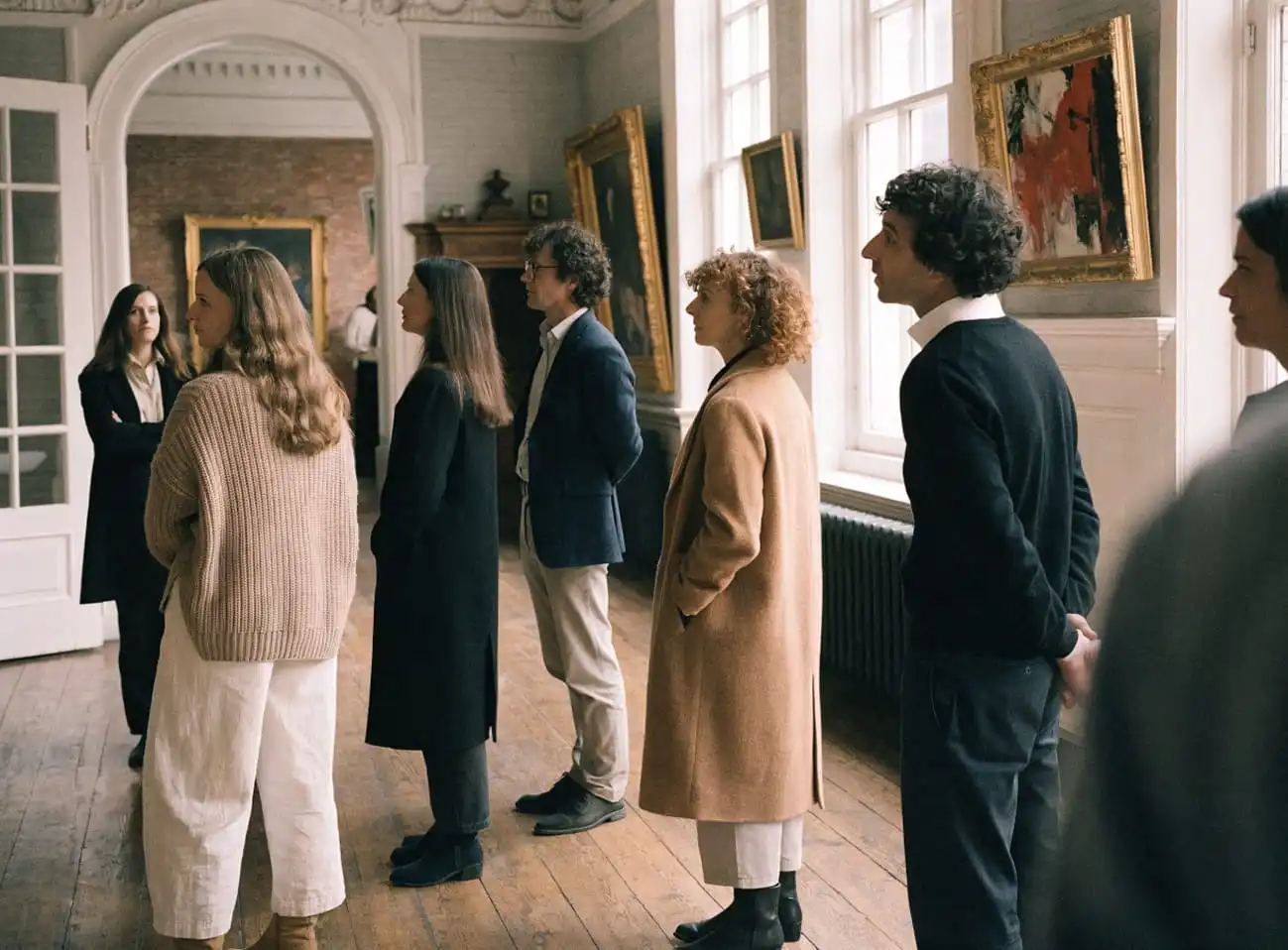
New York is a city where you can sit shoulder to shoulder with someone at the ballet, stand inches apart at a crowded opening, or share a row at a Broadway preview...and still leave without speaking.
A lot of people who love museums, theater, dance, and literature experience those things solo. You grab a last-minute ticket. You wander through a gallery on a Sunday afternoon. You slip into a post-show drink in the West Village and text three different group chats that are now split between Brooklyn and Manhattan logistics.
The city offers constant stimulation. It does not automatically offer connection.
And yet, shared taste is one of the strongest foundations for friendship. The person who also tears up at the final scene. The one who has strong feelings about a new staging. The one who knows why the Met rooftop in June feels like a civic ritual.
If you’re looking for a thoughtful way to meet new people in NYC, arts and culture young members programs are often an overlooked answer.
They offer structured cultural environments where conversation starts with something real. And for many people in their 30s, that makes all the difference.
If you want the short version:
For people in their 30s who want a more intentionally social experience, Field Trip offers small-group Broadway nights and museum events designed specifically to make meeting people feel natural.
Most major cultural institutions in New York offer tiered membership structures, with at least one tier specifically designed for adults under 40. These programs typically go by names like "young patrons," "young fellows," or "junior council," and they exist for a few reasons.
For the institution, they're a pipeline. You come in as a $150-a-year young member, you feel connected, and over the next two decades you become a more significant donor. For members, the value proposition is access to exhibition previews, behind-the-scenes tours, curator conversations, and the occasional gala, all at a price point that doesn't require you to be a trustee.
The social component varies a lot by program. Some are genuinely lively, with recurring programming and a real sense of community. Others are more transactional: you get a card, you save on admission, you get an email a few times a year. The difference usually comes down to how intentional the institution is about creating actual interaction, not just events.
Named after the Greek god of youth and the arts, the Apollo Circle is the Met's dedicated membership group for young donors Metropolitan Museum of Art, typically adults aged 21 to 39 who want a closer connection to the Museum and support its mission to educate and inspire.
Members receive invitations to Apollo-exclusive events annually, including private receptions, curator-led tours, and exhibition viewings, plus access to select general membership gatherings and opening nights. The signature event is the annual Apollo Circle Benefit, a black-tie gala that has historically been held in spaces like the Temple of Dendur, which tells you something about the social register this program operates in.
City Center Circle is open to adults 40 and under, and Circle members receive year-round invitations to artist conversations, dress rehearsals, and cocktail receptions New York City Center tied to that season of programming. Based on current event calendars, that includes things like Encores! dress rehearsals and kick-off events with artistic leadership, and access to rehearsals for visiting companies like Alvin Ailey.
Founded in 1990, the Young Patrons Council is one of the oldest programs of its kind in the city, which means it's had time to build something with actual substance. For adults between 21 and 40, membership gets you past the public-facing version of MoMA and into its working life: curator-led tours, artist studio visits, private collection access, art fair invitations.
The calendar runs two to three events a month across the season, supplemented by exhibition openings and film screenings.
The Young Patrons Circle is for adults 21 to 40 who have real feelings about ballet. And at NYCB, that means Balanchine's legacy, Robbins repertory, and whatever the company is doing right now that people are arguing about in the lobby of the Koch Theater after a Friday night performance.
Members get early access to performance tickets, invitations to exclusive events, and the kind of programming that puts you in actual proximity to the dancers and the work, like open rehearsals, pre-performance receptions, post-show parties. That specificity helps. It's easier to talk to a stranger when you've just watched the same thing together and both have something to say about it.
The Public has one of the strongest institutional identities in American theater. This is where Hamilton started, where Fun Home found its voice, where Free Shakespeare in the Park has been a New York summer ritual for decades. Young Partners is how people in their 20s and 30s get closer to all of it.
The entry tier gets you discounted, no-fee tickets to the Astor Place season and reserved seating for Shakespeare in the Park, which, if you've ever queued for hours on a summer morning hoping to get in, you understand the value of immediately.
The programs above are all worth exploring, and each one has a genuine community around it. But there's an important distinction to understand: most institutional young members programs are designed primarily around the institution's mission, with social connection as a secondary benefit. The programming exists to deepen your relationship with the museum or theater company. Meeting people is a welcome side effect, but it's not the point.
(They can also often function primarily as young donor programs, which come with a hefty price tag.)
Field Trip is a different kind of answer.
Field Trip is a NYC social club built specifically for people in their 30s who want to meet new people through shared arts and culture experiences. It's not a membership program attached to an institution. It's a community organized entirely around the social experience of doing cultural things together.
That means smaller groups, curated so that a Broadway night or a museum tour doesn't just give you proximity to strangers, but actual opportunity to talk, share a reaction, and follow the thread of a real conversation. It means the structure of each event is designed with connection in mind, not access or donor cultivation.
And it means the people you'll meet are there for the same reason you are: because they want to meet interesting people, and they believe that experiencing something meaningful together is one of the best ways to do it.
The tagline says it plainly: the best of New York's arts and culture, with people worth meeting.
Not every program is right for every person. A few things worth thinking through:
Budget: Young members pricing ranges from several hundred dollars to several thousand dollars annually. Field Trip runs on a per-event model that may suit people who want flexibility over commitment.
Event cadence: Some programs host multiple events per month; others offer a handful per season. Think about how often you realistically want to show up and whether the programming calendar matches that.
Social intentionality: There's a meaningful difference between an event where meeting people is possible and one where it's the whole point. If you're primarily there to see the art, institutional programs are excellent. If you're primarily there to build friendships through the art, look for more intentionally social structures.
Age alignment: Most young patrons programs are open to adults under 35 or 40. Field Trip is built specifically for people in their 20s-40s.
Institutional affiliation vs. curated community: Some people want the prestige and programming depth of a major institution. Others want something more personal and deliberately social. Both are valid. The right answer depends on what you're actually looking for.
They can be, but it depends on the program and your approach. Institutional young members programs give you recurring access to events where you'll encounter the same community of people over time, which creates real opportunity for connection. The quality of that social experience varies a lot by institution and event format.
Programs that include more intimate settings (tours, small dinners, behind-the-scenes access) tend to produce better conversations than large opening parties. If meeting people is your primary goal, look for programs with smaller, more structured events alongside their larger gatherings.
The most established programs include the Met's young members program, MoMA's young patrons circle, New York City Ballet's young patrons circle, BAM's young producers, the young partners program at The Public Theater, City Center's young patrons programming, and the Morgan Library's young fellows program.
For people specifically looking for a social-first experience, Field Trip offers small-group cultural outings designed explicitly for meeting people in your 30s.
Different things work for different people. Museums and cultural institutions offer depth and prestige, and their young members programs can build community over time. Social clubs like Field Trip are more explicitly designed for friendship-building, with smaller groups and intentional structure. Many people find the most success combining both: an institutional program for recurring cultural engagement and a more social-forward group for the human side of things.
Field Trip organizes small-group arts and culture experiences in New York City for people in their 30s who want to meet interesting people. Learn more about upcoming events →