
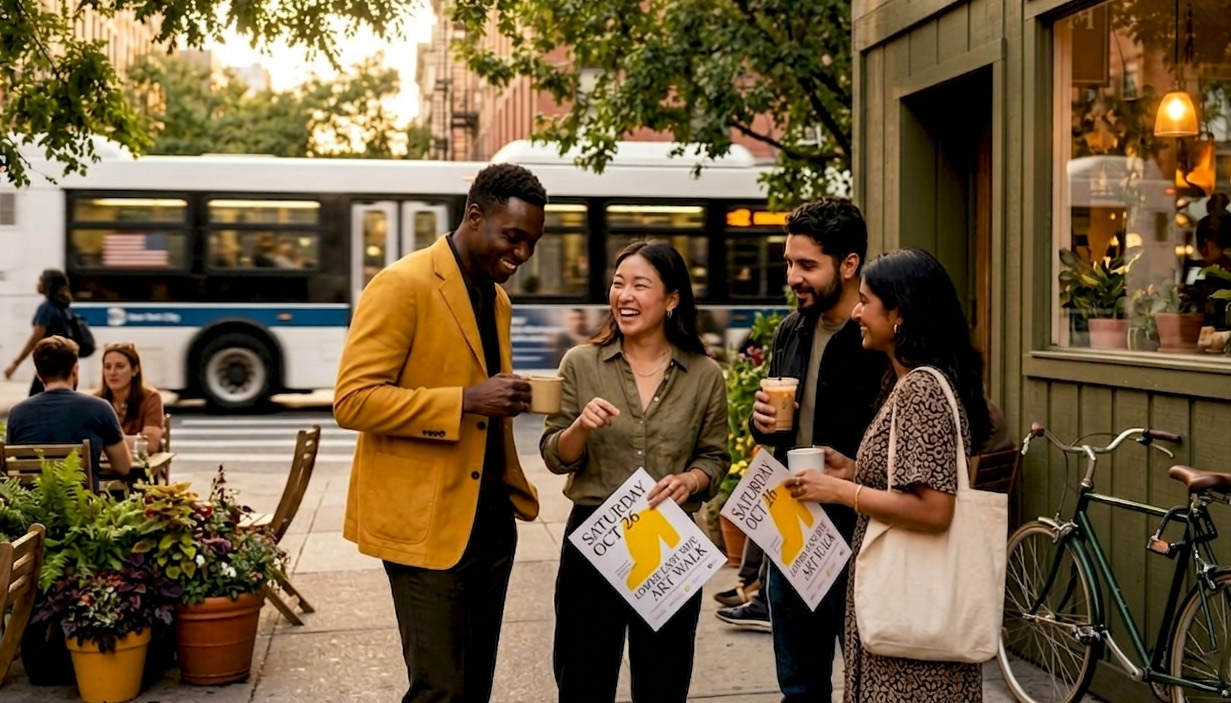
New York City throws roughly 10,000 public events at you every single month. That number sounds exciting until you're standing in front of your laptop on a Thursday night, tabs open, genuinely unsure whether to book tickets for an immersive art experience in Bushwick, a jazz set in the West Village, or a museum opening in Midtown. Learning how to choose worthwhile NYC events is less about finding more options and more about filtering smarter. This guide gives you a clear framework for identifying the best NYC events that actually deliver on their promise of cultural richness and real human connection.
Not every event with a polished Instagram graphic delivers a meaningful experience. The difference between a forgettable evening and one you talk about for weeks usually comes down to a handful of specific qualities.
Community engagement and cultural impact matter more than scale. An event that draws 50 people who genuinely care about the subject will outperform a 500-person gathering built around spectacle. The Met's annual Teen Take The Met! event is a strong example: it combines performances, art activities, and hundreds of local youth participants in a way that deepens community ties rather than just filling a calendar slot. Events that build long-term connections rather than one-off attendance create lasting cultural value.
Operational quality is another reliable signal. Professional event staffing correlates with smooth, well-run events where guests feel welcomed rather than managed. When an organizer invests in trained staff, that investment shows up in the details: clear check-in, attentive hosts, and a pace that lets you actually enjoy the experience.
Here are the core criteria worth checking before you commit to any event:
Pro Tip: Before booking, search the event organizer's name alongside "review" or "experience" on social platforms. Real attendee feedback surfaces faster than any official description.
The best local events in New York rarely announce themselves loudly. The ones worth attending tend to travel through trusted channels first.
Generic event aggregators pull from everywhere, which means they surface everything without filtering for quality. Instead, focus on sources with editorial judgment. Local cultural institutions publish their own calendars, and organizations like The Public Theater release ticketing details well in advance. For example, Free Shakespeare in the Park runs May through late June with day-of ticket distribution at borough sites and the Delacorte Theater, and the best seats go to people who know the system, not the ones who find out last minute.
Following arts-focused community organizations puts you inside the information flow rather than chasing it. Social clubs built around cultural experiences, like Fieldtripnyc, do the vetting work for you. They select events based on atmosphere, organizer quality, and connection potential, then bring a small group of like-minded people together to attend.
Pro Tip: Follow the social media accounts of specific venues you love, not just general NYC event pages. Venues post about programming weeks before it appears on aggregator sites.
Seasonal awareness also sharpens your planning. Memorial Day weekend marks a genuine shift in NYC's social energy, with rooftops reopening, outdoor dining returning, and theaters buzzing with awards season momentum. June brings major highlights like Governors Ball and NYC Pride March, alongside the 2026 FIFA World Cup. Knowing these seasonal rhythms helps you plan ahead rather than scrambling at the last minute.
Once you know where to look, the selection process itself benefits from a clear sequence. Here is the approach that consistently produces the best results.
Pro Tip: If you are attending solo, position yourself near the drinks or food area during any social portion of the event. It gives you a natural reason to pause and makes you approachable without effort.
Even with good intentions, a few predictable errors can turn a promising evening into a disappointing one.
The best NYC event experiences come from preparation meeting openness. You do your research, then you let go of the plan and actually show up for the people and the art in front of you.
After attending an event, a few minutes of honest reflection will sharpen your instincts considerably over time.
Signs that an event was genuinely worthwhile:
When an event falls short, note what specifically disappointed you. Was it the crowd, the programming, the venue, or the organization? That specificity helps you adjust your criteria for next time rather than just writing off an entire category of events.
Building connections through recurring events accelerates this process. When you attend the same series or club gathering multiple times, you move past first-impression conversations into actual friendships. That continuity is something one-off events rarely produce on their own. Fieldtripnyc's curated event groups are designed around exactly this principle: small, recurring gatherings that let relationships develop naturally over shared experiences.
Maintain your curiosity and stay willing to try formats you have not explored before. Some of the most memorable NYC arts experiences happen in unexpected venues with artists you have never heard of.
I have attended hundreds of NYC arts and cultural events over the years, and the pattern I keep returning to is this: the events that stick with me were almost never the biggest or most hyped ones. They were the ones where the organizer clearly cared, the group was small enough to actually talk, and the art gave us something to react to together.
What I have learned is that popularity is a poor proxy for quality. Major events like Fleet Week's July 2026 celebration or a sold-out Broadway opening are genuinely exciting. But they are not automatically where you will find your people or your most meaningful cultural moment. Sometimes that happens at a 40-person gallery opening in Greenpoint on a Tuesday.
I prioritize events where I can sense the organizer's point of view. When someone has made specific choices about what to include and why, that intentionality shows up in every detail of the evening. I also trust my gut about atmosphere within the first ten minutes. If the vibe reads more like a well-appointed living room than a crowded lobby, I know I am in the right place.
My advice: stop trying to attend everything and start attending the right things. Preparation matters, but so does adaptability. The best evenings often take a turn you did not plan for.
If the process of vetting, booking, and planning still feels like a logistics problem you would rather hand off, that is exactly what Field Tripwas built for.
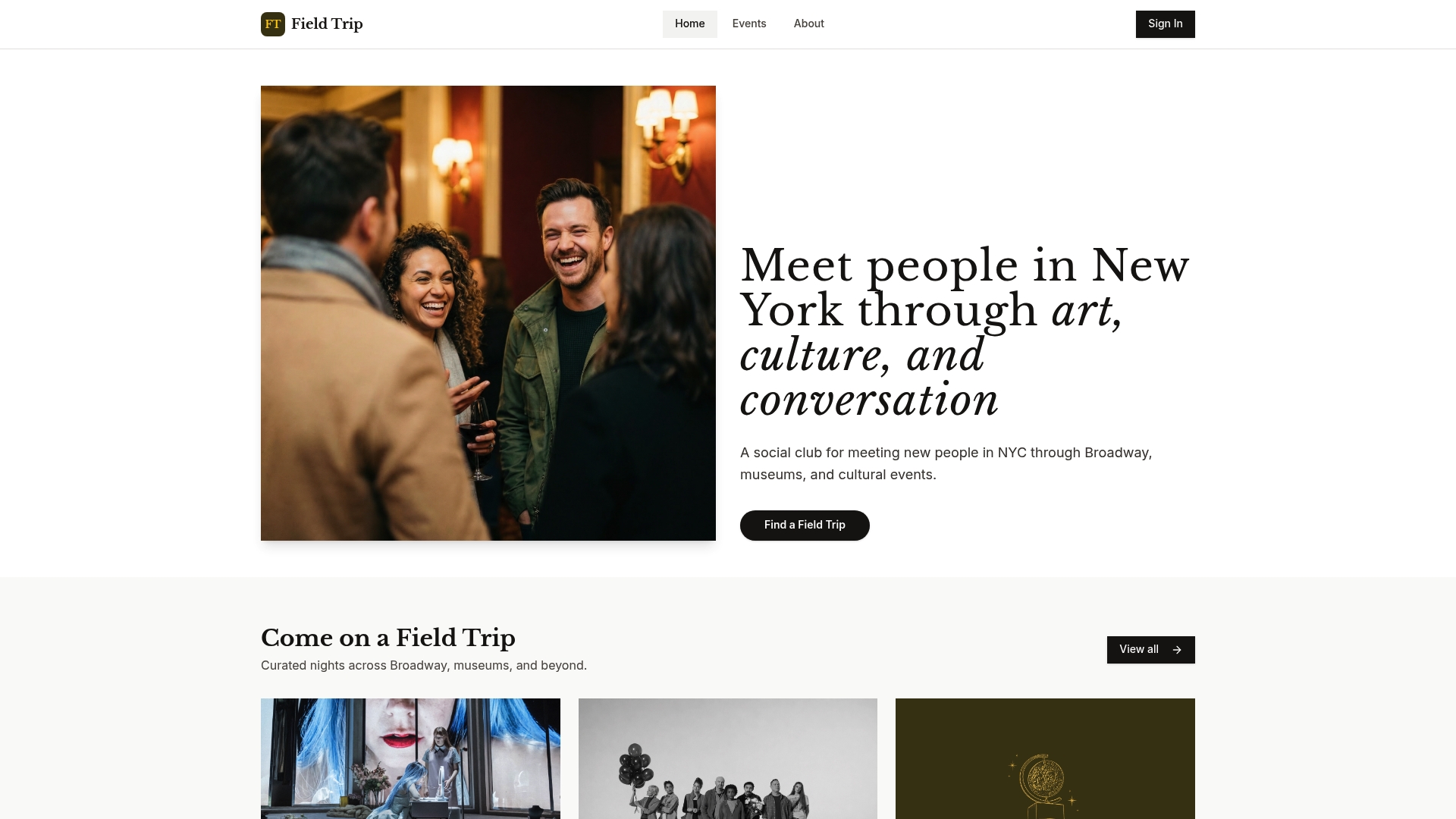
Field Trip is a social club for people who love arts and culture and want to experience NYC's best offerings without the planning overhead. Every outing is curated for quality, with an average of 12 attendees per gathering, so you are always in a group small enough for real conversation. From Broadway shows to museum visits to gallery nights, every event on the Field Trip has been selected because it meets a genuine standard for cultural richness and social warmth. Browse the current event listings and find your next worthwhile evening in New York City.
A worthwhile NYC event has clear programming, a reputable organizer, and an atmosphere that supports genuine connection. Professional staffing and strong community reviews are reliable quality indicators.
Follow institutional calendars and arts-focused social clubs directly rather than relying on aggregator sites. For free events like Shakespeare in the Park, day-of ticketing requires in-person presence and early timing.
Yes, often. Free events like community parades and museum programs can deliver rich cultural experiences. Focus on programming quality and organizer reputation rather than ticket price.
One or two carefully chosen events per month will serve your social and cultural goals better than a packed calendar. Depth of experience matters more than volume.
Attend smaller gatherings where conversation happens naturally, and arrive with a specific observation about the art or program ready to share. Social clubs like Fieldtripnyc structure their outings specifically to make introductions easy.